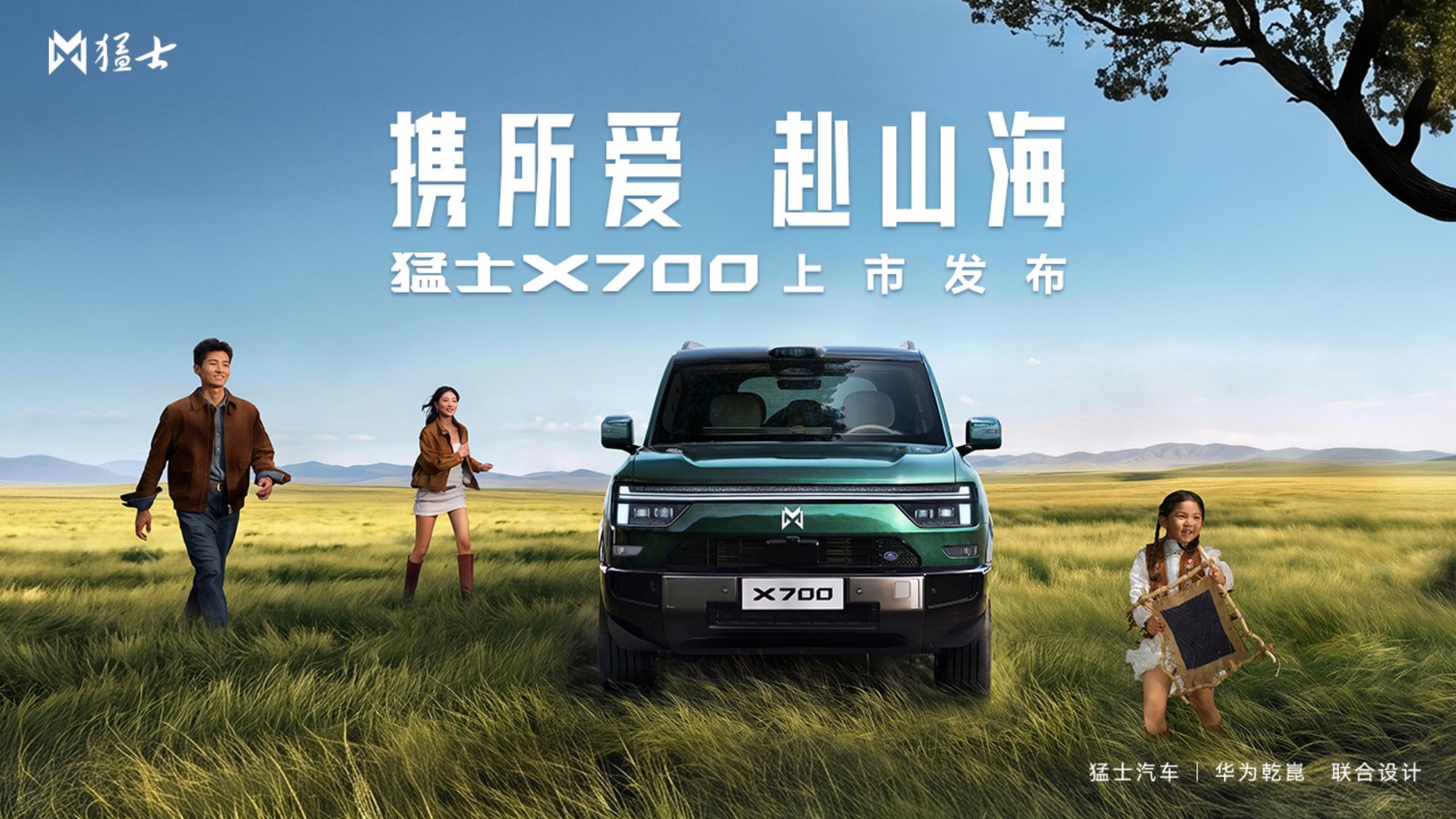
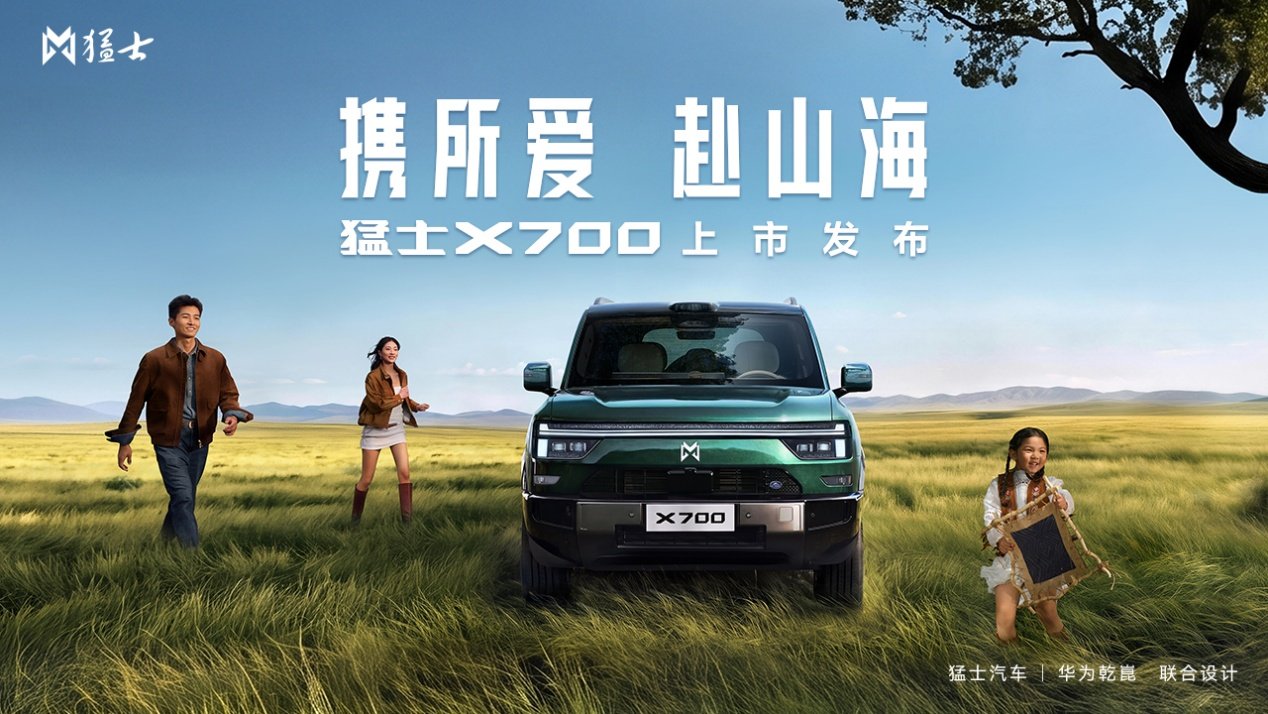
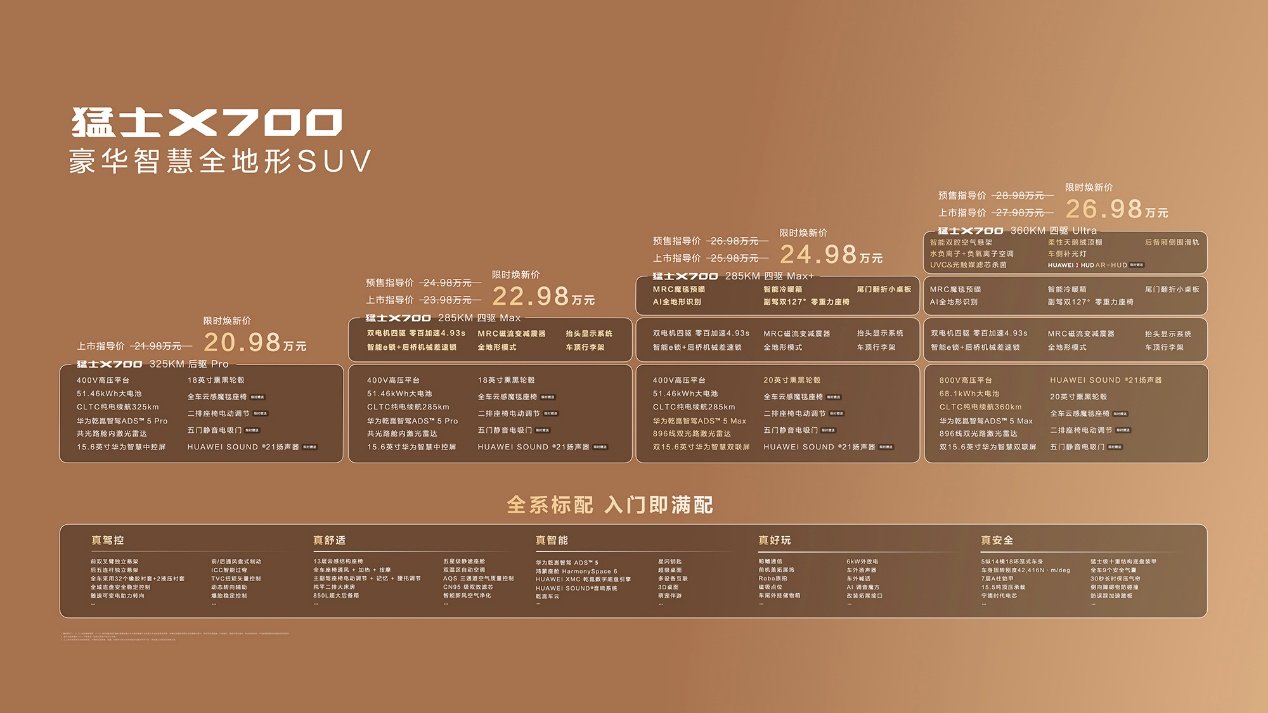
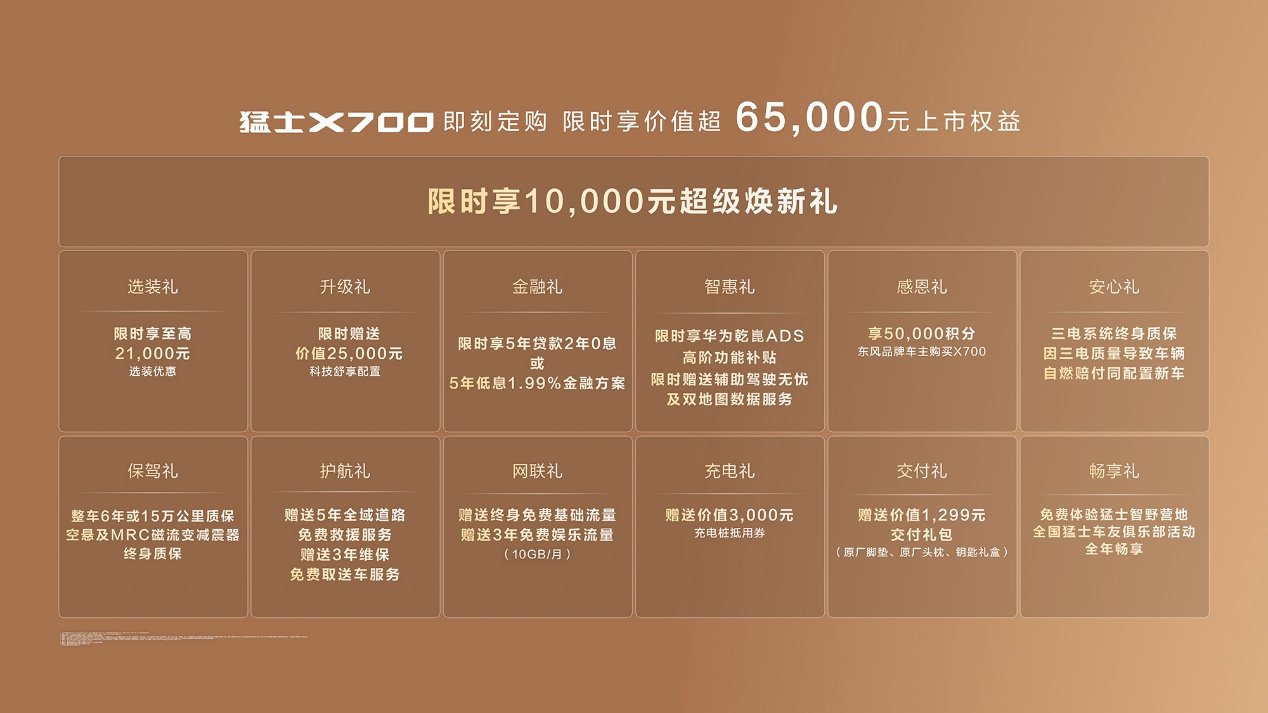
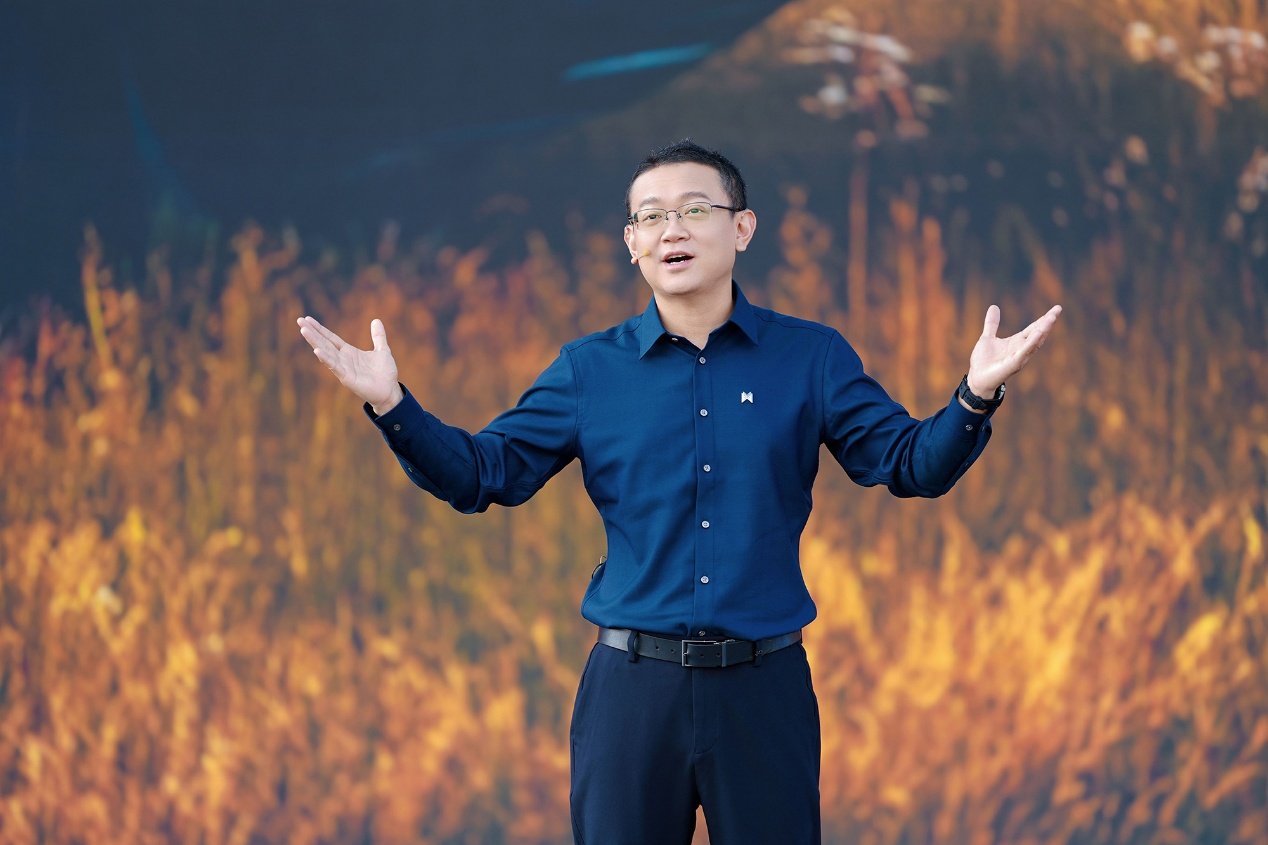
On October 25, the M-Hero X700 was officially launched. Four models, with guide prices from 219,800 to 279,800 yuan. Customers who place a locked order before November 30 can get another 10,000 yuan off, with a limited-time refreshed price starting at 209,800 yuan. The launch event theme was "Take Your Loved Ones to the Mountains and Seas," and the venue was an outdoor grassy field, with kids running around and adults sitting down—the atmosphere actually matched the positioning of this car quite well. It's not meant for you to go tear up the dunes alone; it's meant for you to take the whole family out to have fun.
This year, boxy SUVs have been launching in droves, and consumers have long been spoiled for choice. But after watching the M-Hero X700 launch event, there are a few things I think are worth mentioning.
"Launch means delivery"—that phrase carries a lot of weight now
New car launch events have been frequent these past two years, but there's often a gap of several months between "unveiling" and "delivery." M-Hero held a handover ceremony for the first batch of owners right after the launch event ended, which shows that production capacity and channels were prepared in advance. For users, no waiting—that experience gap is far more tangible than throwing in two extra features. Currently, display cars and test-drive vehicles have already arrived at stores, and orders can be placed through the app and mini-program. If you want to buy one, you don't have to just look at slides.
Four verifiers—more interesting than the manufacturer talking to itself
M-Hero didn't have executives read out specs from beginning to end this time. Instead, they brought in four real users to "verify the car," covering four dimensions: family, off-road, technology, and daily use.

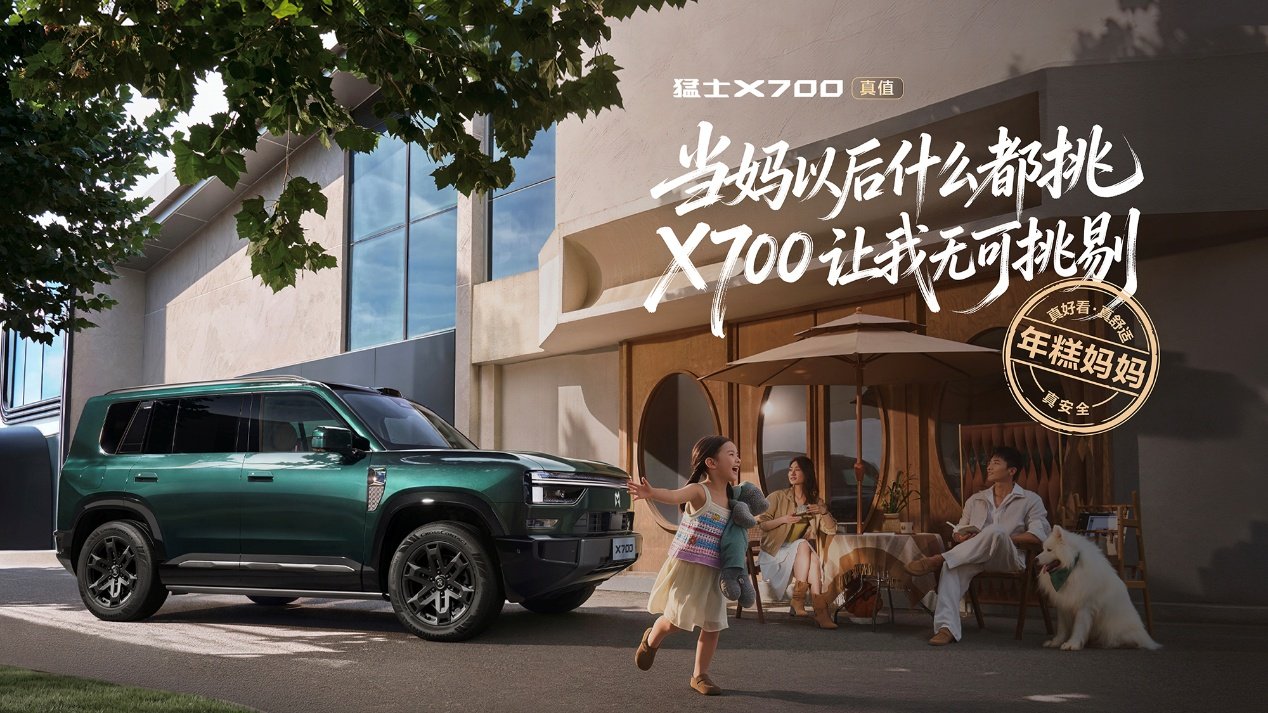
Parenting blogger Niangao Mama tested it using the standards she'd apply to taking kids in an MPV: 850L trunk, 56 storage compartments, cloud-comfort magic carpet seats with four-way lumbar support and massage, double-layer soundproof glass, 30-second pressure-holding side air curtains. Her verdict was "a boxy SUV that takes comfort to the extreme."
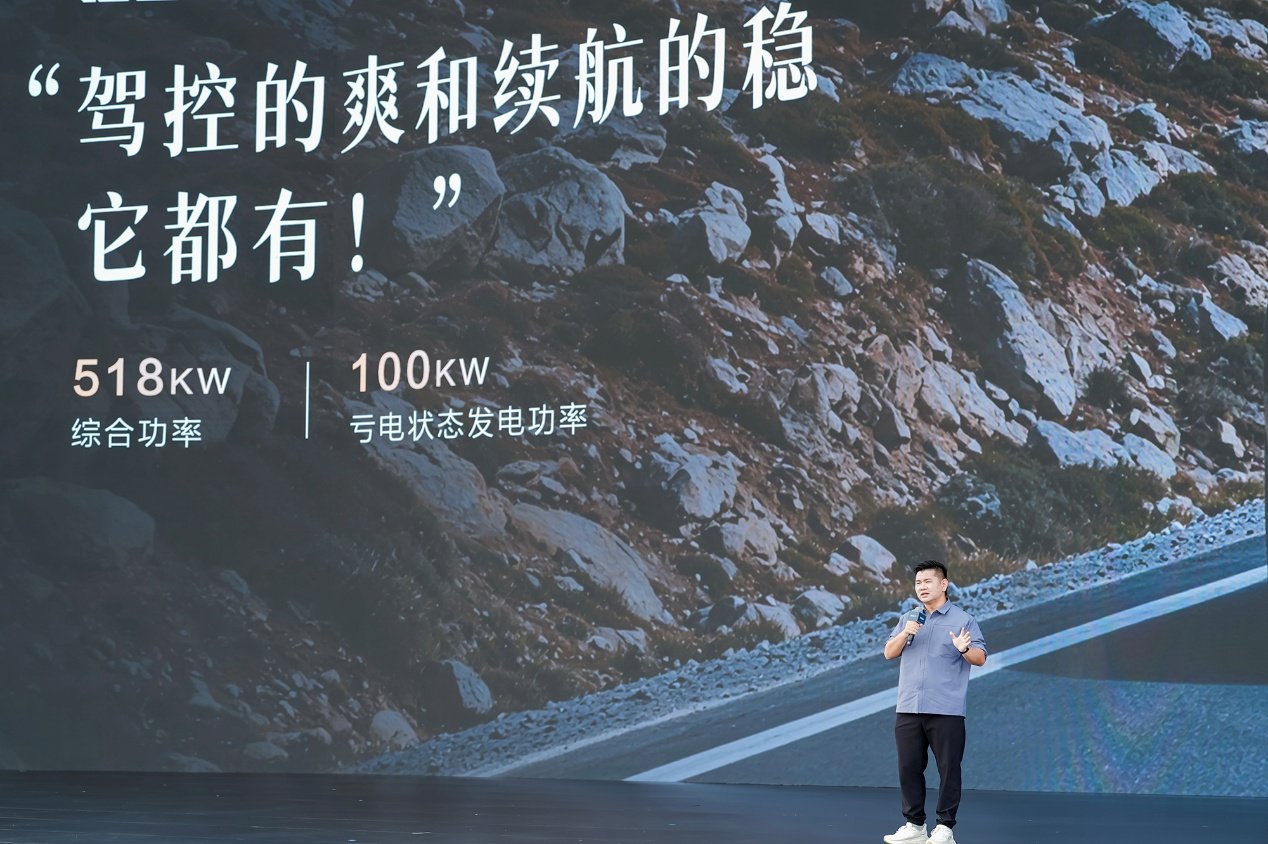
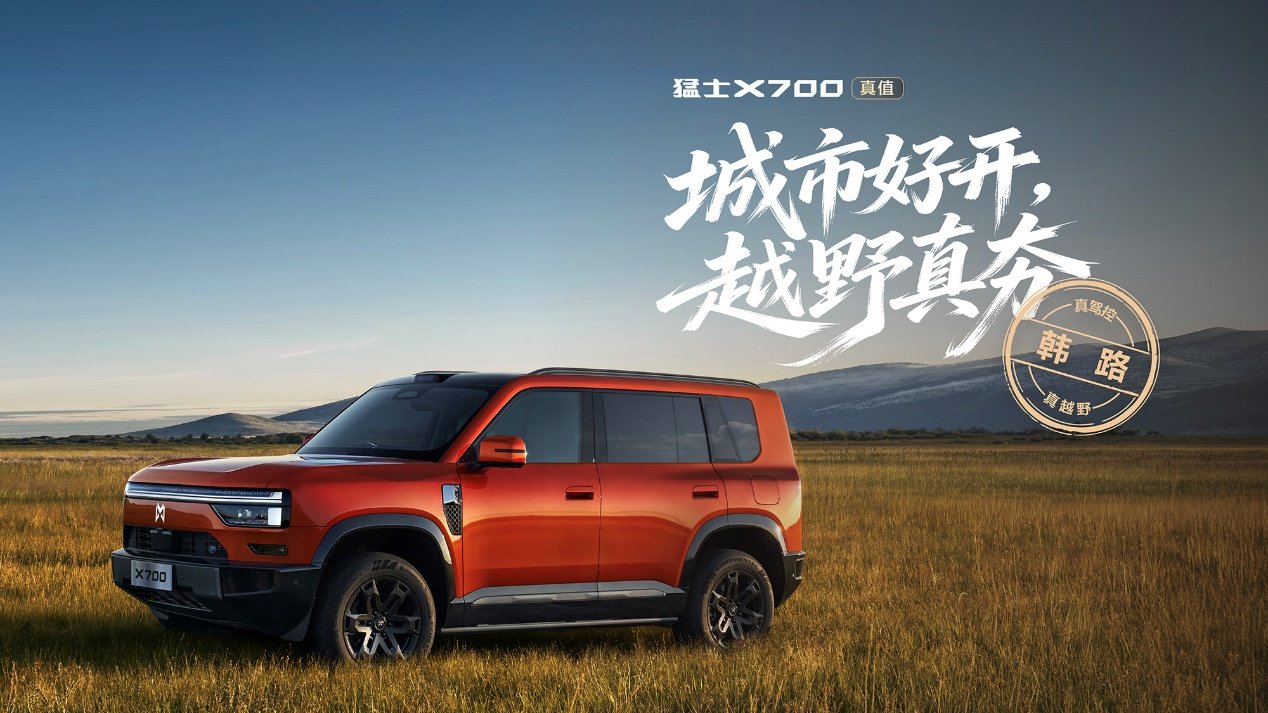
Off-road veteran Han Lu tested the chassis and passability: MRC magnetorheological dampers with 0.001-second response and 1,000 adjustments per second, 328.8mm ground clearance, 800mm wading depth, rear axle mechanical differential lock. His conclusion was "easy to drive in the city, genuinely tough off-road."

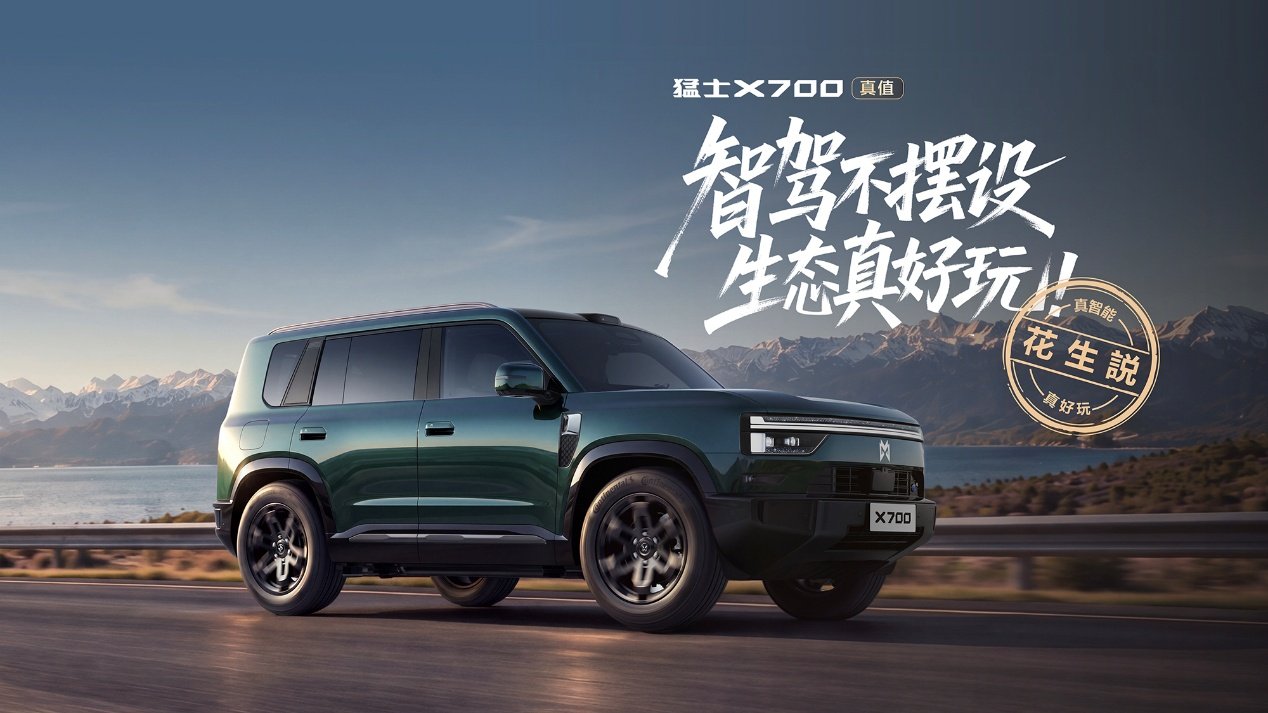
Tech UP host Huasheng focused on testing Huawei Qiankun ADS 5 and HarmonyOS Cockpit 6: 27 sensors including an 896-line LiDAR, parking-spot-to-parking-spot 3.0 with zero takeovers throughout. His exact words were "the smart driving isn't just for show, and the ecosystem is genuinely fun." Pioneer owner A Guo started from the whole family's needs and ultimately gave it a "one car replaces three" verdict.

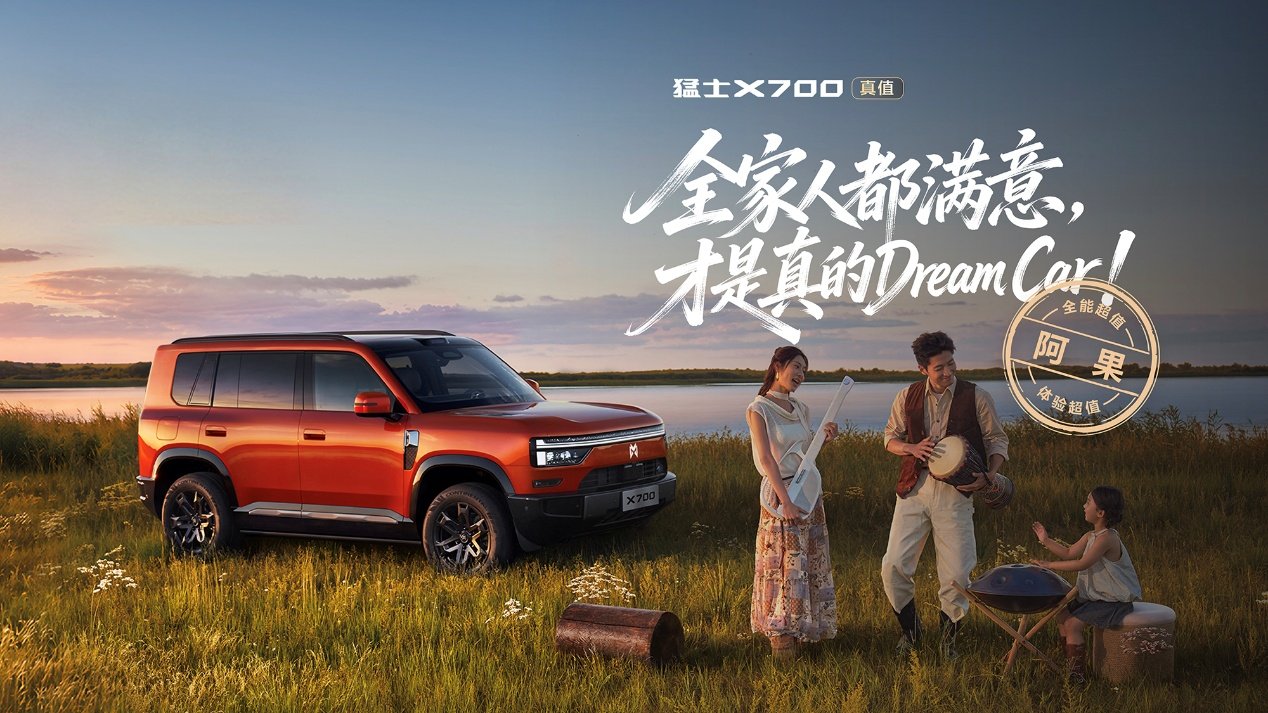
Of course, you could say these are positive cases hand-picked by the manufacturer, but at least it's more convincing than self-promotion. And the four people's angles don't overlap—family comfort, off-road capability, intelligent experience, and daily use each cover their own ground. After watching, you can basically piece together the full picture of this car.
Huawei Qiankun full-stack onboard—this is the X700's ace in the hole
The cooperation between M-Hero and Huawei isn't simply buying a smart driving solution and bolting it on. The X700 is the first car from the two sides' strategic cooperation 2.0, with Huawei Qiankun ADS 5, HarmonyOS Cockpit 6, NCA Off-road Edition, HUAWEI XHUD Off-road Edition, and Robo Travel Photography—basically clearing Huawei's automotive BU shelf.
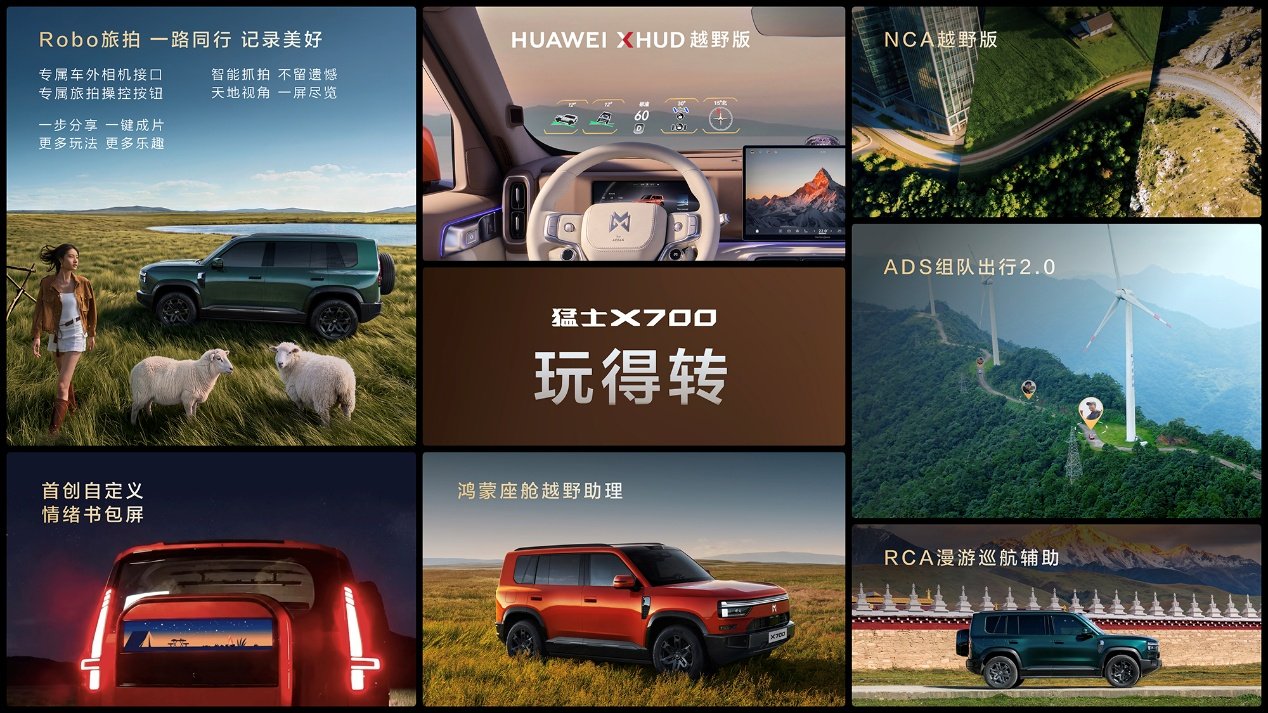
A few details worth mentioning: the NCA Off-road Edition extends assisted driving to rural dirt roads; the HarmonyOS Cockpit off-road assistant can provide route and camping information; the XHUD Off-road Edition directly displays differential lock status and body roll angle. These features aren't gimmicks—they're genuinely usable in off-road scenarios. Huawei Senior Vice President Jin Yuzhi personally showed up, citing a real test at 4,200 meters in western Sichuan, which shows both sides are quite invested in this car. For ordinary users, the most direct feeling might be: during commutes, smart driving saves you effort; out in the wild, the car's system can even tell you how to navigate that dirt road ahead.

How to choose among the four models? Don't just look at price—look at how you'll use it
The price gaps between the four models range from 10,000 to 60,000 yuan, but M-Hero's segmentation this time is fairly clear. Each car corresponds to a different lifestyle, not just stacking features.
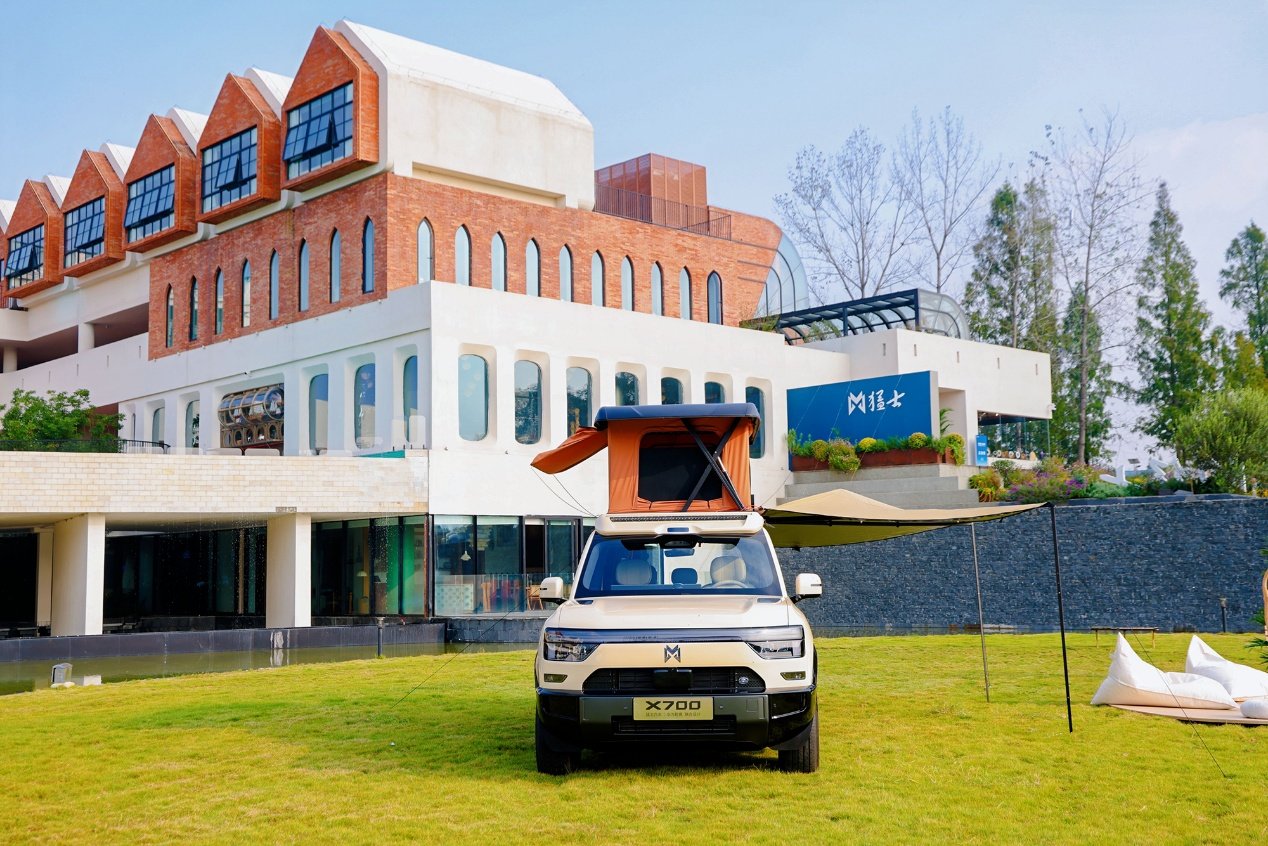
325KM RWD Pro, 209,800 yuan, is the entry model of the lineup, but entry doesn't mean stripped-down. 51.46 kWh CATL battery, CLTC pure electric range 325km, Huawei Qiankun ADS 5 Pro, 15.6-inch smart central control screen, HarmonyOS Cockpit 6 are all included. Full-car seat ventilation, heating and massage, double-layer soundproof glass, and smart fresh air purification are also there. Who is this car for? Users who mainly commute in the city and occasionally take the family out to the suburbs on weekends. The 325km pure electric range means basically no need to refuel on weekdays, and it's enough for a nearby weekend trip. It doesn't have four-wheel drive or air suspension, but if you're on paved roads 90% of the time, the money you save is enough for years of fuel.
285KM AWD Max, 10,000 yuan more than the Pro, but that 10,000 is spent where it counts. Dual-motor four-wheel drive, MRC magnetorheological dampers, intelligent e-lock plus rear axle mechanical differential lock, all-terrain modes—hardcore off-road equipment all at once. Driving in the city, the MRC dampers filter out most bumps; once out of town, the differential lock and all-terrain modes give you the confidence to hit rough roads. This car is the watershed of the entire product line—from this point on, the X700 truly earns the word "off-road." Suitable for users who commute Monday to Friday, want to take the family camping in the mountains on weekends, and occasionally hit some unpaved roads. In one sentence: comfortable in the city, capable in the wild.
285KM AWD Max+, building on the Max with more tech and comfort. Zero-gravity passenger seat, smart heating/cooling box, dual 15.6-inch Huawei smart dual screens, plus upgraded 896-line dual-path LiDAR and Huawei Qiankun ADS 5 Max, with AI all-terrain recognition also included. This car targets users who are obsessive about tech experience—higher LiDAR line count means more precise smart driving perception, while the dual screens and zero-gravity seat are for the family members riding along. You enjoy the driving and smart driving; your passenger enjoys zero gravity and the heating/cooling box—each gets what they need.
360KM AWD Ultra, 279,800 yuan, is the flagship. MRC magnetorheological dampers, dual-chamber air suspension, and magic carpet preview three-in-one chassis, 800V high-voltage platform, 68.1 kWh CATL large battery, CLTC pure electric range 360km, Huawei Qiankun full suite maxed out. Over 72% of small-deposit customers chose the Ultra—that number says a lot. People talk about cost-effectiveness, but when it comes time to pay, they still want the best. The Ultra's significance isn't about volume—it's about telling the market: a boxy SUV can also have a million-yuan-class chassis experience. If your budget allows and you want to get it all in one step, don't hesitate on this one.
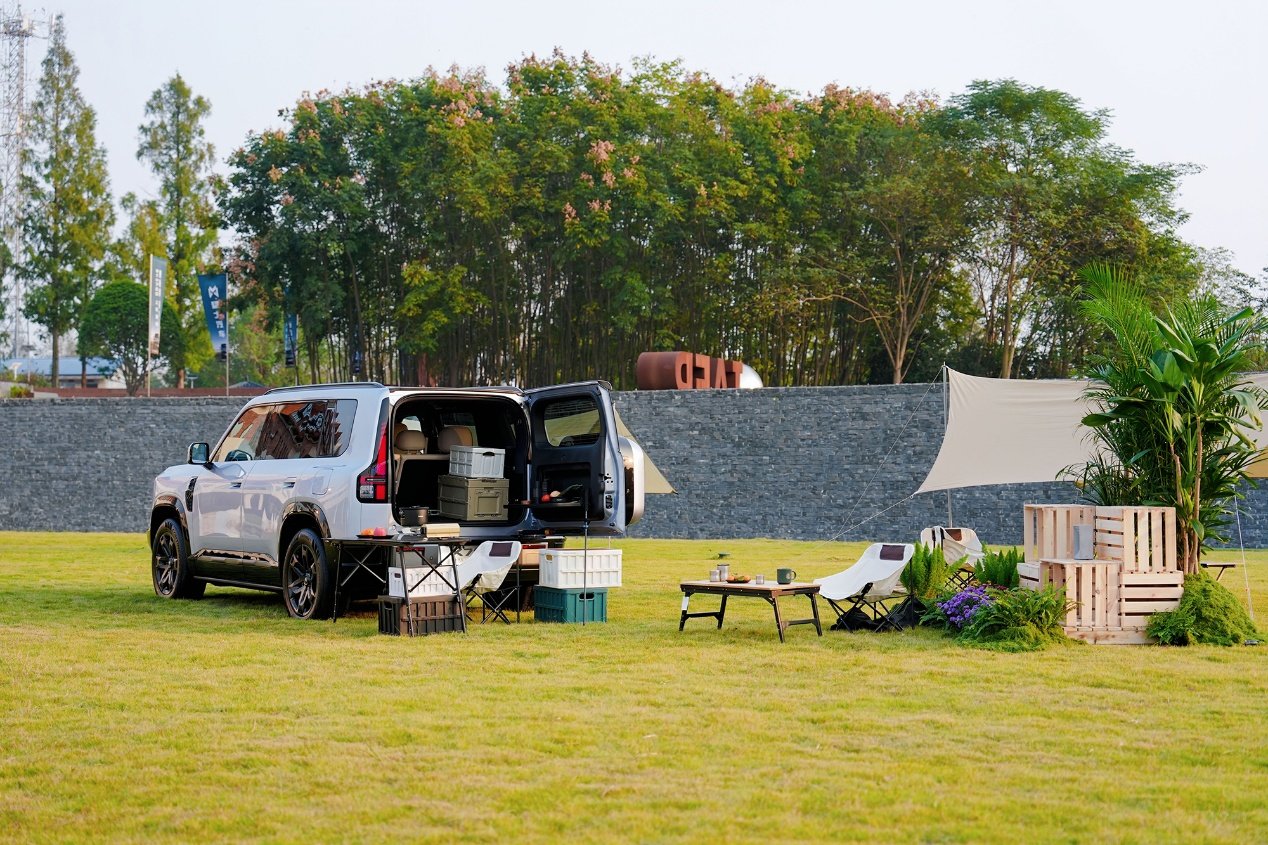
From Pro to Ultra, M-Hero's logic isn't simply "more money, more features"—each step up broadens the car's usage scenarios by a layer. Pro is city commuting plus light outdoor use, Max is city plus real off-road, Max+ is tech and comfort maxed out, Ultra is the flagship with everything. Figure out where you'll drive most of the time and where you occasionally want to go, and choosing really isn't complicated.
Service network is a hidden bonus
M-Hero CEO Wan Liangyu shared a figure at the launch event: after-sales network to exceed 200 locations by 2026 and 350 by 2027, full coverage in Tibet and Xinjiang, and self-driving service stations about to open. What boxy SUV users fear most is being stranded once out of the city. If this layout truly materializes, it's a solid guarantee for long-distance self-driving groups. Buying an off-road vehicle isn't just buying hardware—it's buying the confidence that "someone will take care of it if something breaks."
Final thoughts
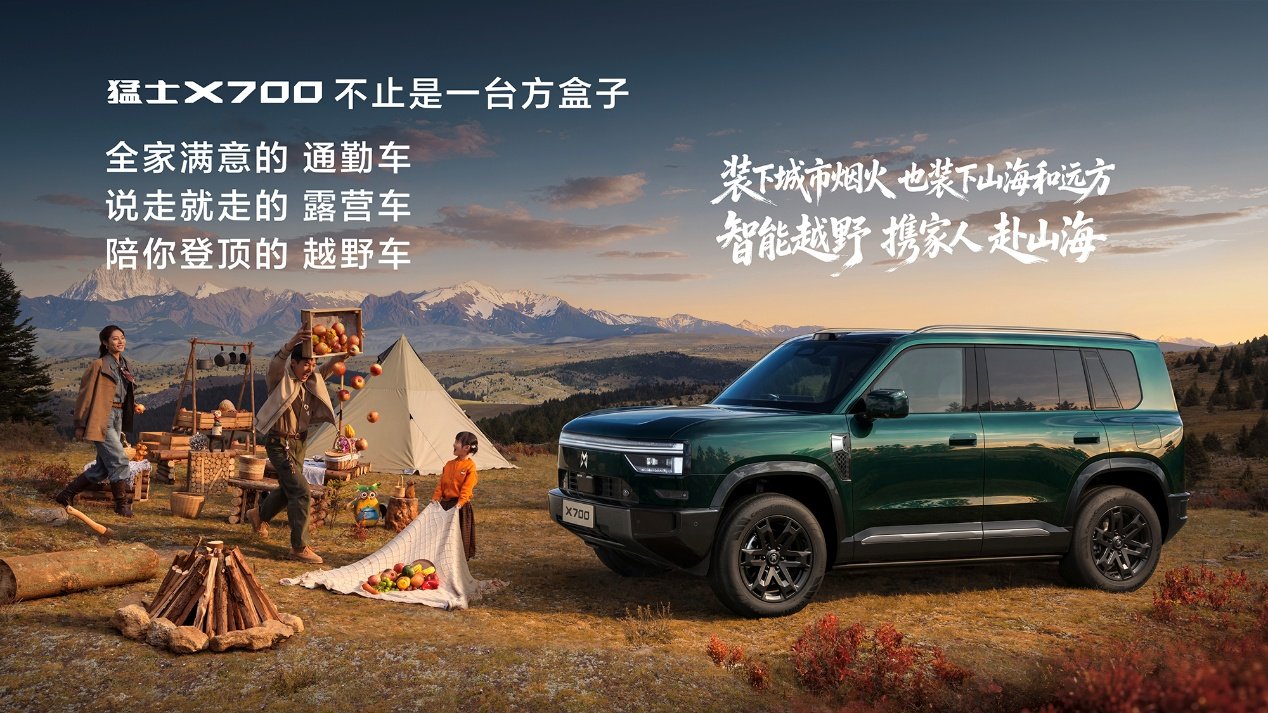
The M-Hero X700, plainly put, is trying to fuse two somewhat contradictory things—"hardcore off-road" and "family intelligence"—into one package. From the product definition, it didn't take a pure hardcore route, but rather uses off-road capability as the foundation and intelligence and comfort as selling points. With a limited-time price starting at 209,800 yuan, paired with the Huawei Qiankun full suite and MRC air suspension, the value proposition is genuinely strong.
Of course, how the car really performs will depend on feedback from real users after driving 10,000 to 20,000 kilometers. But at least from this launch campaign, M-Hero is serious—launch means delivery, four verifiers doing real testing, clear positioning for four models, service network laid out in advance. Every step is responding to the question of "is it worth it."
Currently, display cars and test-drive vehicles have arrived at stores. I'd suggest those interested go take an actual drive. Focus on testing two things: first, how the MRC dampers handle speed bumps and rough roads; second, how often Huawei's smart driving requires takeovers in urban areas. After testing these two things, you'll大概 know whether this car suits you.