
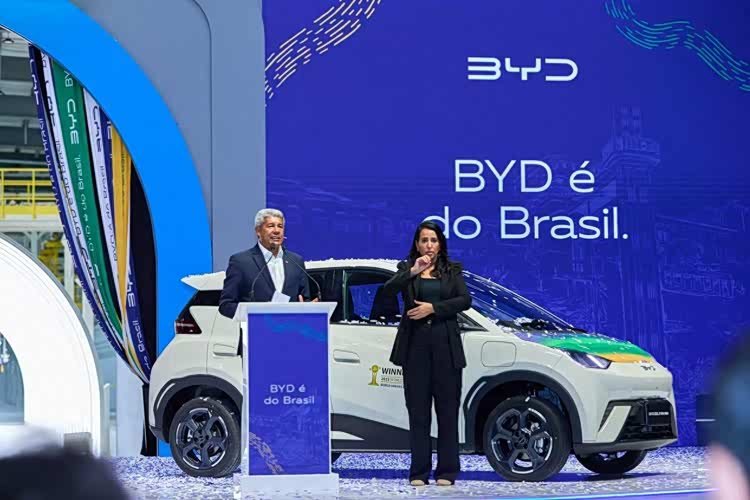
The governor of Bahia, Brazil's Minister of Culture, and the mayor of Camaçari jointly pressed the start button, and a brand-new BYD Seagull electric vehicle slowly rolled off the production line—this scene took place on July 1 local time at the first vehicle rollout ceremony of BYD's Brazilian passenger vehicle factory. As BYD's first complete vehicle manufacturing base in the Americas, the factory took only 15 months from groundbreaking to first vehicle rollout, with an investment of 5.5 billion reais (about 7.1 billion yuan), creating a production system with a planned annual capacity of 150,000 vehicles and expected to create 20,000 local jobs.
BYD's rise in Brazil can be called a model for new energy vehicles in opening up emerging markets:
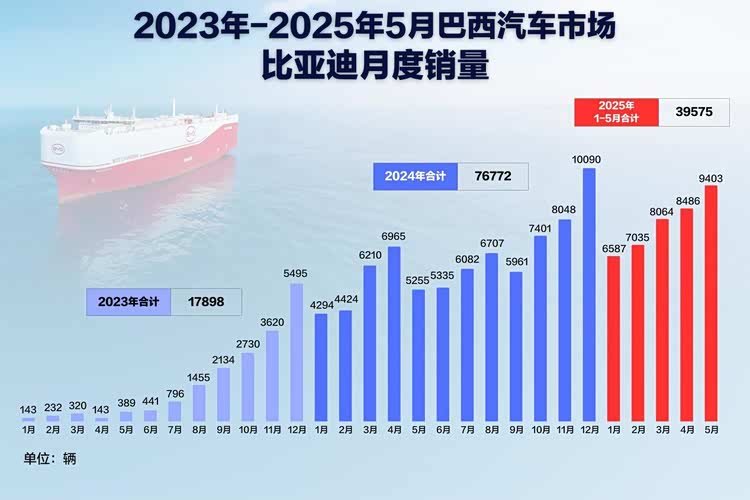
In 2022, annual sales were only 260 vehicles, in 2023 they soared to 17,000, and in 2024 it achieved an astonishing leap—annual sales exceeded 76,000 vehicles, with a growth rate as high as 328%.
In 2025, the surge continued: cumulative sales from January to May reached 39,000 vehicles, and in May alone it jumped to fourth place in Brazil's passenger car brand retail sales ranking, with a market share of 9.7%, surpassing traditional brands such as Toyota and Hyundai.
Dominance in segmented markets: In May 2025, BYD's pure electric models had a market share of 92.16% in Brazil, and plug-in hybrid models also held a 35.8% share, forming an absolutely leading advantage.
This explosive growth stems from a precise market strategy: although the same models are priced at 2-3 times that of the domestic market, through the high-end endorsement of the Tang EV as President Lula's official car, as well as localized marketing of models such as the Song Pro and Seagull, BYD successfully shaped the brand image of a "high-quality new energy leader."
The rollout ceremony at the Brazilian factory coincides with the full harvest period of BYD's overseas strategy:
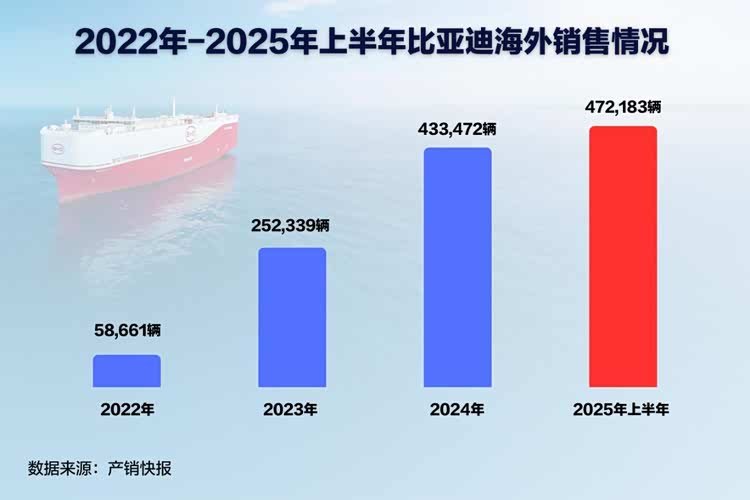
Breadth of coverage: its business has spread across six continents and more than 110 countries and regions, with overseas sales reaching 472,000 vehicles in the first half of the year, a year-on-year surge of 132%, and the full-year overseas sales target aiming at 800,000 vehicles.
Topping multiple countries: in the first quarter of 2025, it won the sales championship in 7 countries—in Hong Kong, its market share across all brands exceeded 30%, in Thailand it ended the 30-year monopoly of Japanese cars, in Australia's new energy market it crushed Mitsubishi, and in the UK its sales soared 620% year-on-year.
European breakthrough: in May, total sales in 16 European countries reached 12,363 vehicles, surpassing Tesla for the first time by a margin of 99 vehicles, among which sales in Germany soared 824% year-on-year, and sales in Spain reached 3 times those of Tesla.
BYD breaks through trade barriers through a dual-track strategy of "technology export + localized production": to respond to the EU anti-subsidy investigation, it is building a factory in Hungary with an annual capacity of 200,000 vehicles; to address shipping bottlenecks, it has even formed its own fleet of 8 ro-ro ships (4 have already been launched), taking the initiative in logistics.
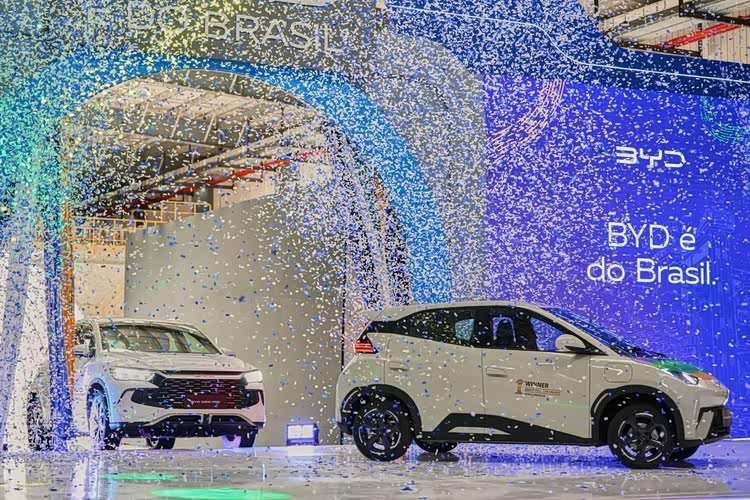
This factory located in Camaçari carries significance far beyond production capacity: sited in the core area of the Salvador metropolitan region, relying on the local mature automotive industry chain and port logistics advantages, it naturally possesses the hub capacity to radiate across the entire South American market. It adopts a "three-factory complex" model (complete vehicles, chassis, batteries), and joins hands with local supply chain partners to build an industrial ecosystem and promote the localization of new energy standards—Brazil has already taken the lead in incorporating BYD's charging standard into national regulations.
The first Seagull model put into production at the factory focuses on the mass market, and subsequently models such as the Song Pro and Destroyer 05 will form a gradient product matrix, covering different consumer tiers1. This layout directly targets the pain point of the Latin American market—the region's electric vehicle penetration rate is less than 2%, leaving huge room for growth.

As Brazil plans to raise the import tax rate on electric vehicles to 35% in 2026, BYD's localized production not only avoids tariff barriers, but also achieves deep regional integration through job creation (20,000 positions) and technology transfer (introducing blade battery production lines). As Executive Vice President Li Ke said, the factory is "a new starting point for the development of sustainable transportation in Latin America"—as Chinese companies begin to lead the formulation of industry rules, a technology-driven restructuring of the global automotive landscape has already accelerated.


