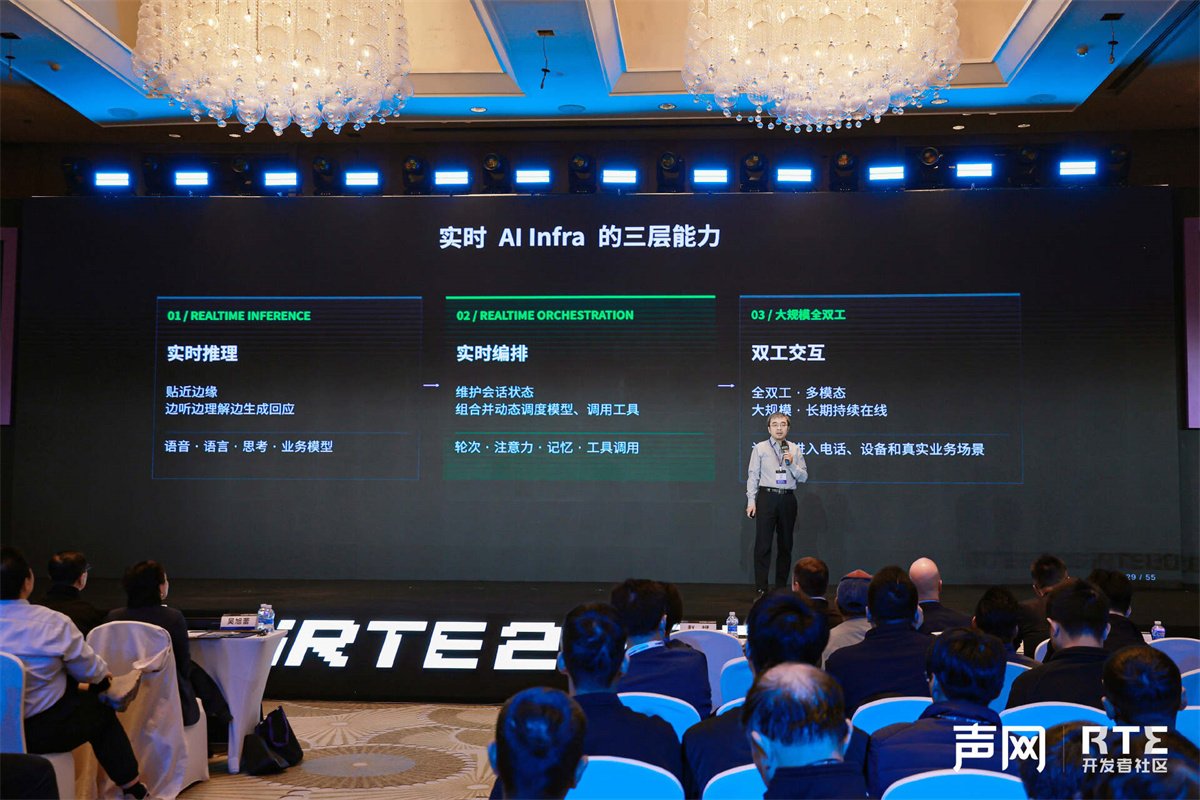
On October 23, iRTE2026 Real-Time Intelligence Conference was held in Beijing. Zhao Bin, founder and CEO of Agora, delivered a keynote speech titled "Conversing with AGI: The Next Chapter of Real-Time Interaction" at the main forum, reviewing key changes over the past year in real-time interaction, conversational AI, and underlying infrastructure, and proposing a "Five-Level Dialogue Capability" framework that outlines the evolutionary path of conversational AI from basic responses toward deep understanding and relational communication.
Zhao Bin believes that as AI moves from answering questions to sustaining conversations, understanding context, and executing tasks, the subject of real-time interaction is expanding from person-to-person to person-to-Agent. The role of real-time interaction technology is extending accordingly: it must not only make information delivery more stable and fluid, but also provide real-time support for AI's perception, understanding, expression, and action.
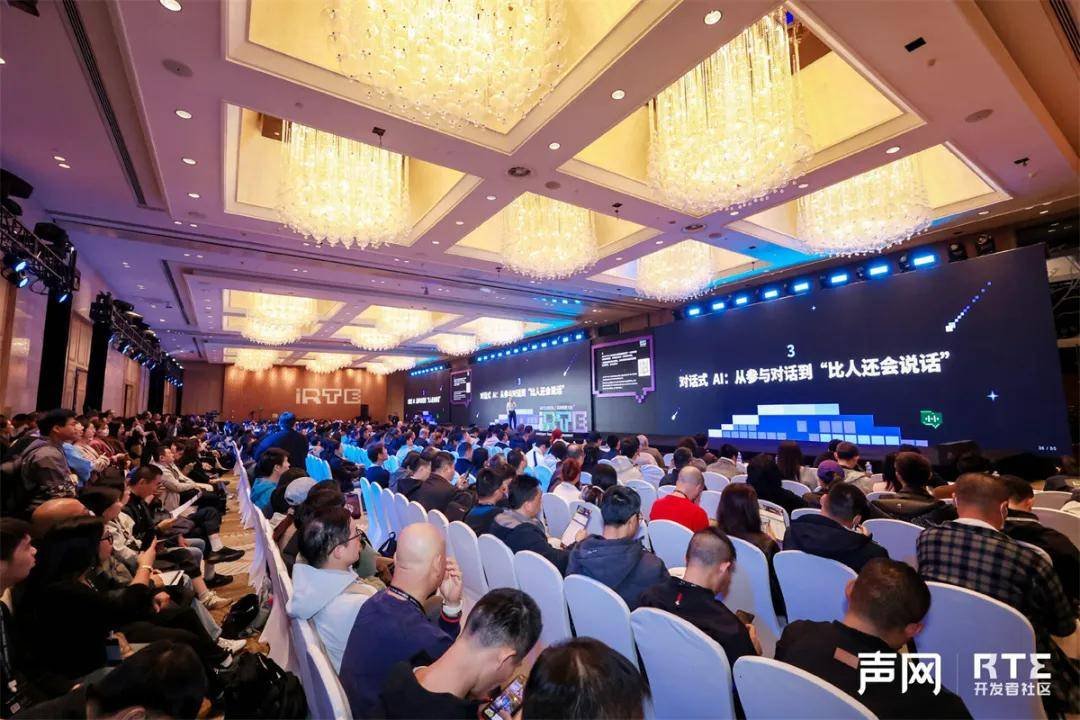

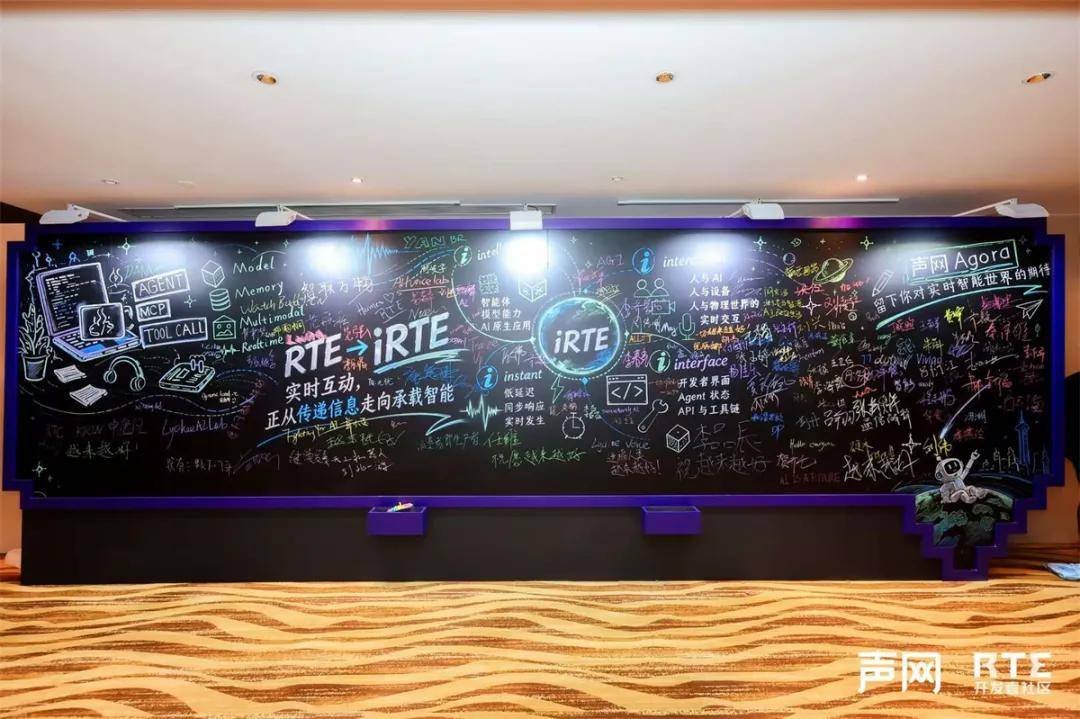
From "one question, one answer" to deep relational communication: the five-level evolution of conversational AGI
In Zhao Bin's view, the progress of conversational AI should not be measured solely by response speed or language naturalness. More importantly, it is whether AI can understand the intent, situation, and relationships of the conversation partner, whether it can express itself appropriately in complex scenarios, and whether it can gradually form long-term, deep understanding.
Based on this judgment, Zhao Bin proposed the "Five-Level Dialogue Capability" framework in his speech, dividing dialogue capability into five levels:
L1, expression based on one's own perspective: centered on self-expression and passive continuation, achieving "one question, one answer."
L2: expression based on interaction patterns: moving from passive response to proactive expression, making conversations more natural and coherent.
L3: communication based on individual cognition: understanding an individual's identity, intent, and situation to achieve personalized communication.
L4: communication based on group cognition: understanding social relationships and role differences, adapting to complex multi-person communication scenarios.
L5: communication based on deep relationships: understanding long-term context and relationship evolution, forming deeper understanding and intellectual rapport, enabling communication to move from understanding the present moment to understanding a person.
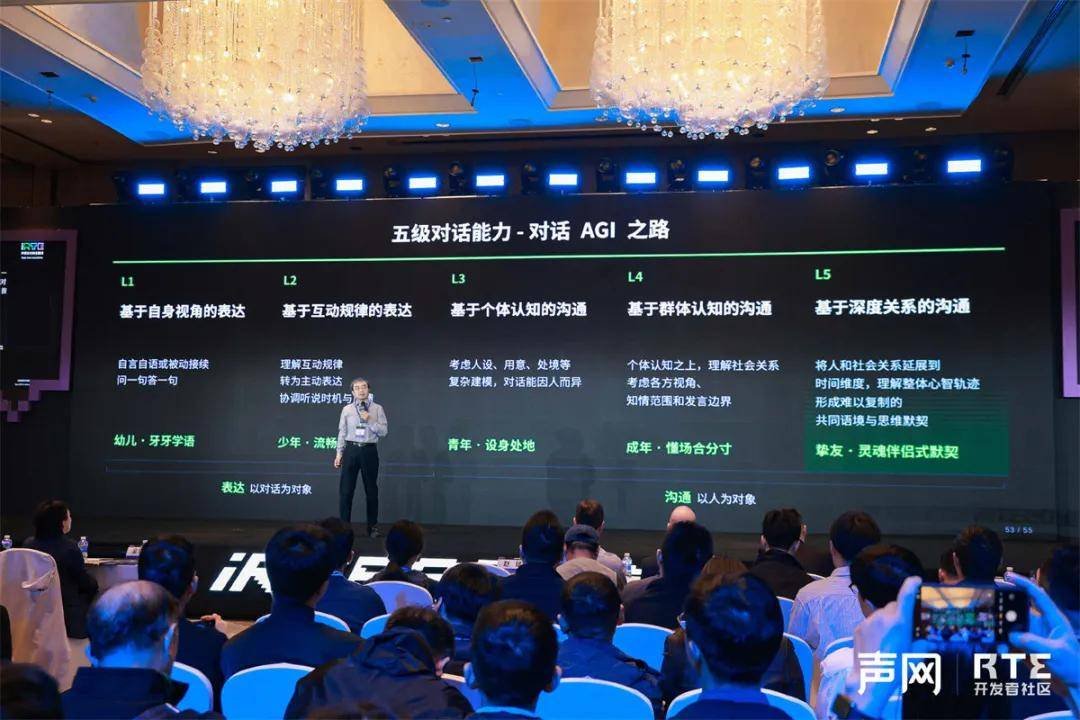
What these five levels demonstrate is not just the progressive enhancement of dialogue technology, but also the changing relationship between AI and humans: from completing a round of Q&A, to understanding a person, to understanding relationships between people, and ultimately forming deep communication that transcends time and context.
Zhao Bin pointed out that conversational AI is developing from early passive-continuation interactions toward more proactive, more natural full-duplex dialogue, and is beginning to attempt to understand people's personalities, situations, emotions, and relationships. Looking ahead, AI also needs to break through role division and communication order in complex social scenarios, and further understand the context accumulated by individuals over time. This is also an important direction for conversational AGI: AI can not only understand a single sentence, but also combine the full context to understand a person's true intent and respond appropriately.
Real-Time AI Infra: the key infrastructure supporting conversational AGI
The continuous evolution of dialogue capabilities also places higher demands on underlying technology. Zhao Bin mentioned in his speech that over the past year, deeper adoption of WebRTC technology by companies such as OpenAI has driven broader attention and application of real-time interaction technology in the conversational AI field. As AI moves from single-turn Q&A to sustained interaction, real-time interaction infrastructure is becoming an important technical support connecting models, agent runtime frameworks, and users.
Compared with traditional AI applications, dialogue scenarios have stricter requirements for latency, stability, and bidirectional interaction. AI needs to receive user input while understanding context and organizing responses, and when necessary respond to interruptions at any time while continuously invoking tools and advancing tasks. Significant latency in any link may undermine the naturalness of the conversation and may even affect whether a task can be completed.
To support these requirements, Zhao Bin introduced the infrastructure direction for real-time intelligent interaction: through global real-time transmission networks, distributed cloud-edge-device joint inference, real-time orchestration, and full-duplex interaction capabilities, models and Agents can continuously coordinate in real-world scenarios. The Agora Conversational AI Engine also centers on full-duplex interaction, connecting models, Agent runtime frameworks, and users to support stable, synchronized real-time dialogue experiences.
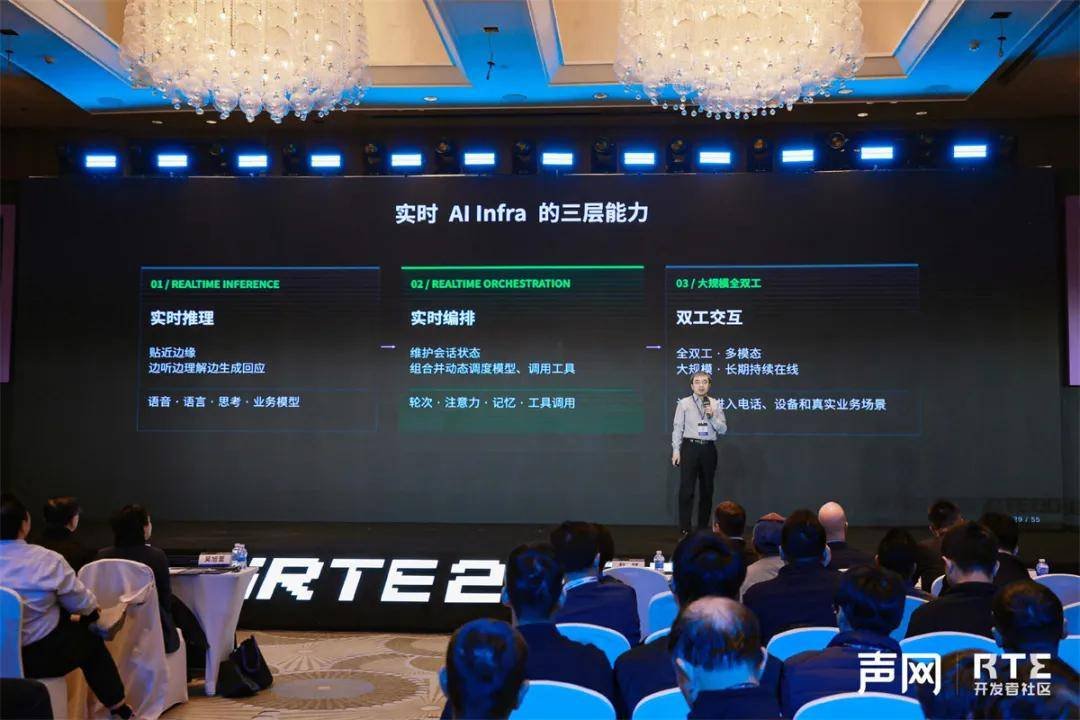
At the same time, Agora continues to improve conversational AI development tools and development kits for developers, combining capabilities such as SDKs, Skills, CLI tools, and Recipes to help developers build Agents with complete logic and execution capabilities more efficiently.
From customer service and education to AI companionship and smart wearables, Zhao Bin believes that conversational AI is entering more real-world scenarios. Whether AI can truly create value depends not only on whether the model can "talk," but also on whether it can understand needs, communicate naturally, and continuously complete tasks. Real-time interaction technology will play an increasingly important role in this process.
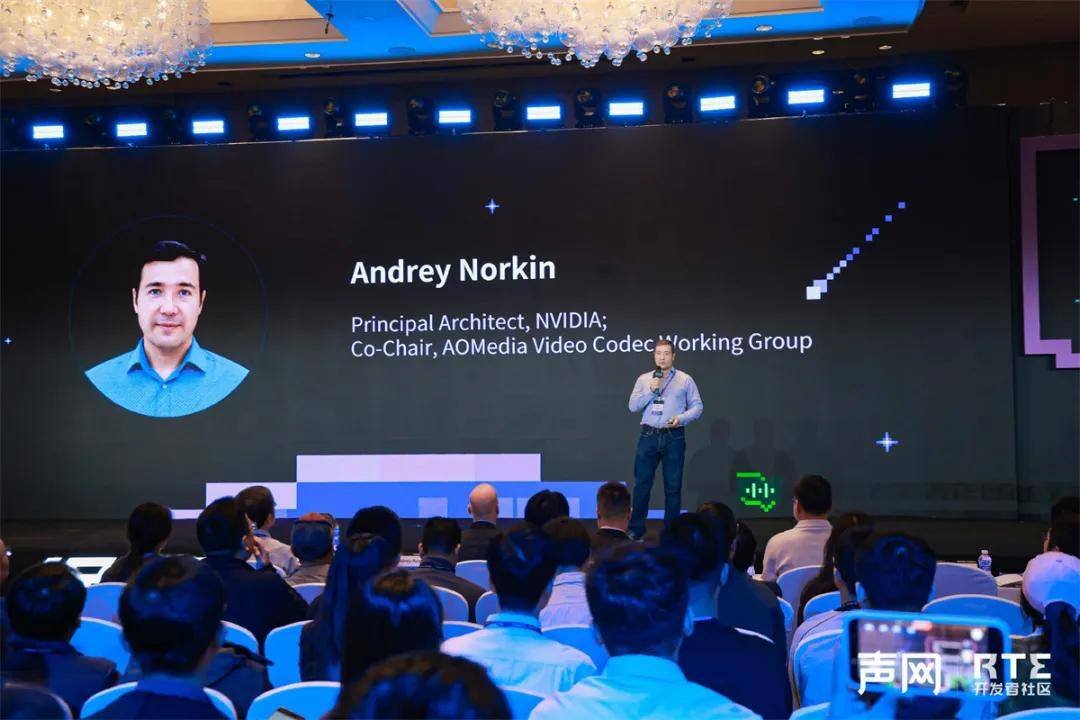
Subsequently, Andrey Norkin, Chief Architect at NVIDIA and co-chair of the AOMedia Video Codec Working Group, delivered a speech on AV2 video codec technology.
Roundtable: Will personal agents become the next-generation personal entry point?
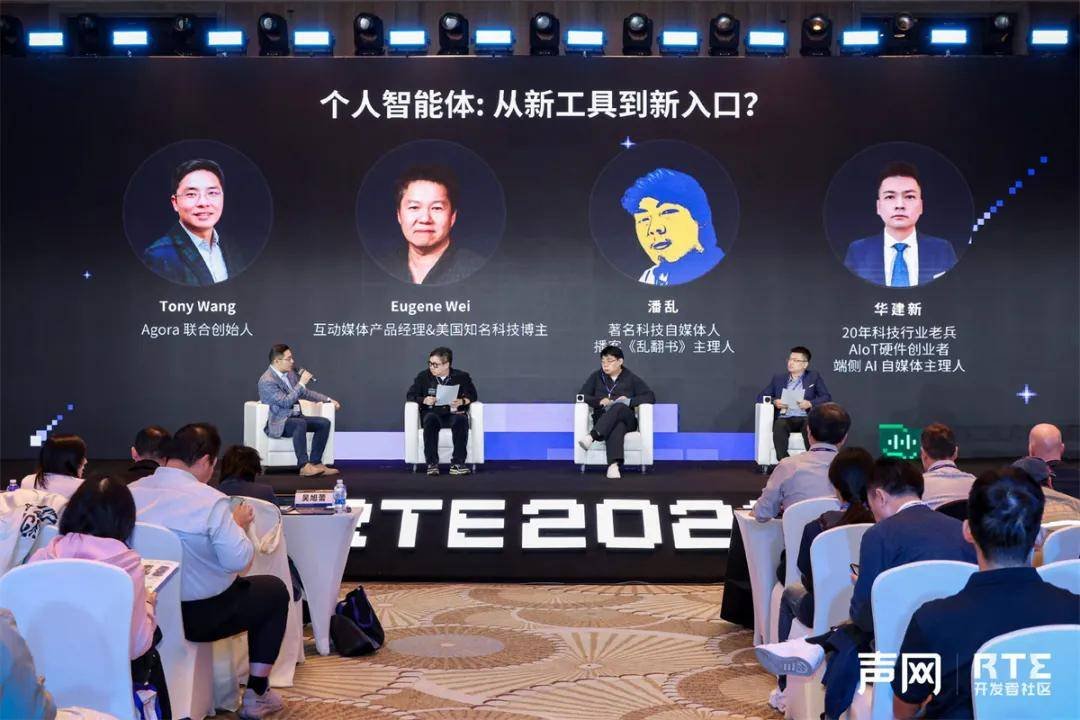
In the first roundtable hosted by Tony Wang, co-founder of Agora, Eugene Wei, interactive media product manager and tech blogger, Pan Luan, tech self-media creator and host of the podcast "Luan Fan Shu," and Hua Jianxin, AIoT hardware entrepreneur and edge AI self-media host, discussed "Personal Agents: From New Tool to New Entry Point?"
From phones, glasses, and earphones to more wearable devices, personal agents are reigniting industry thinking about the next-generation human-computer interaction entry point. Pan Luan believes that personal agents may bring about a paradigm shift: the value of AI products is shifting from competing for user attention to helping users complete tasks more efficiently. Future personal agents should not only respond to explicit instructions, but also proactively take on tasks and help users handle matters that have clear goals but are not worth investing large amounts of time in.
Regarding next-generation personal hardware, Hua Jianxin proposed that the future entry point may not be monopolized by a single type of device; glasses, earphones, and other hardware capable of perceiving the environment and executing tasks all have opportunities. He believes that personal agents not only need to understand users, but also need to continuously perceive the real world and take action through physical devices, which brings new development space for different forms of hardware.
Eugene Wei steered the discussion toward the value of "context": whether personal agents can truly understand users' interests, communication records, and social relationships will affect whether they can become valuable personal entry points. In measuring whether a new entry point is viable, he also suggested paying attention to users' daily interactions with Agents, and whether users proactively seek out Agents more often or Agents proactively seek out users more often. The roundtable thus further discussed the product value, hardware forms, and future measurement standards of personal agents.
Roundtable: From "can chat" to "can get things done," how can conversational AI create real value?
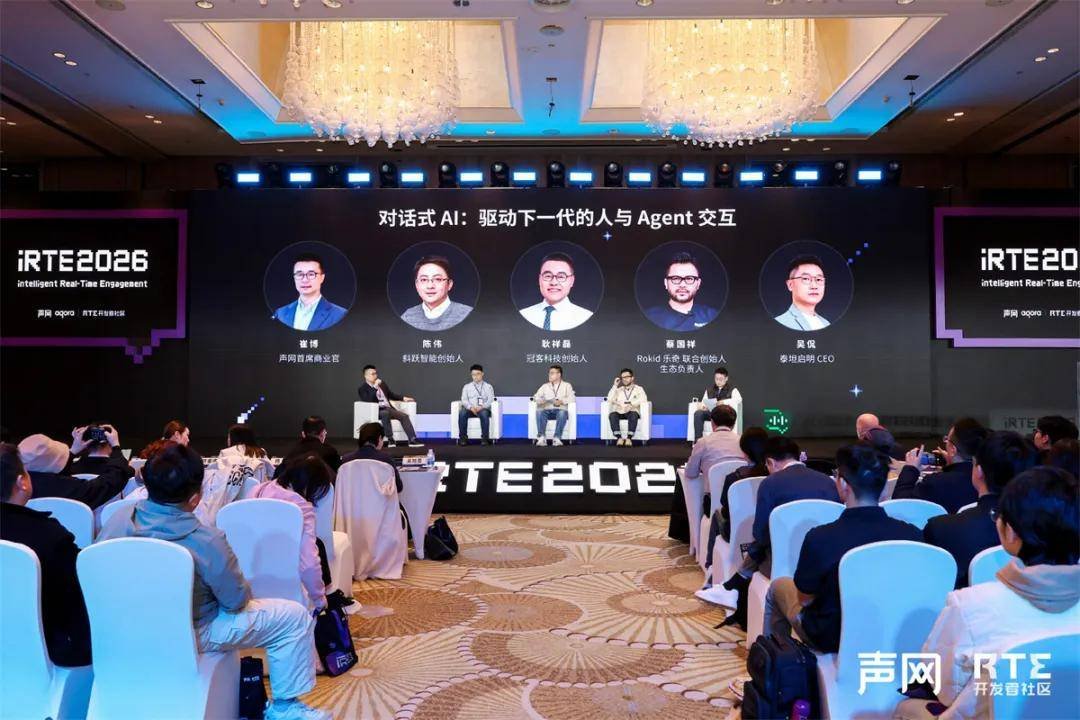
In the second roundtable hosted by Cui Bo, Chief Commercial Officer of Agora, Chen Wei, founder of Xieyue Intelligence, Geng Xianglei, founder of Guanke Technology, Cai Guoxiang, co-founder and ecosystem lead of Rokid, and Wu Kan, CEO of Titan Qiming, discussed conversational AI from different scenarios including embodied intelligence, smart wearables, enterprise marketing, and AI recruiting: driving the next generation of human-Agent interaction.
Chen Wei believes that the key to embodied intelligence is enabling human intent to truly translate into robot action. Robots must not only understand voice commands, but also integrate multimodal information such as vision, voice, and their own state to complete perception, planning, and decision-making about the physical environment, and continuously adjust task execution based on environmental changes after action. Compared with completing preset demonstration tasks, it is more important for robots to continuously understand people's real needs in open environments, so that actions always remain consistent with human intent. Xieyue Intelligence is developing a new paradigm embodied foundation model called Duplex Reasoning, aiming to achieve integrated robot interaction and action.
Cai Guoxiang, starting from the practice of AI glasses, emphasized that dialogue experience is the core competitiveness of AI wearable devices. He stated that no matter how powerful the hardware and the AI capabilities behind it are, if the conversation is not natural enough, the user experience will be directly affected. In the future, AI wearable devices need to use low-latency, stable real-time interaction, as well as understanding of semantics and long-term context, so that users gradually no longer feel they are talking to AI. He also shared Rokid's practice of adopting Agora RTC link services for its AI assistant and expressed optimism that AI glasses will become an important personal entry point in the AI era.
In enterprise application scenarios, Geng Xianglei pointed out that for AI voice agents to achieve reliable business delivery, they must solve issues such as latency, interruption timing, and anthropomorphism, among which latency may even directly affect task outcomes. For To B marketing, AI also needs to combine with industry knowledge systems and human collaboration to better ensure business results. Wu Kan, combining AI recruiting practice, said that conversational AI can help recruiting businesses reach job seekers at scale and improve service efficiency, rather than simply replacing humans. To form a business loop, it is also necessary to accumulate industry data, organize business with job seekers as the subject, help Agents build long-term memory, and around actual business events such as interview arrival and onboarding, assist AI in continuously evaluating and optimizing service quality.
From the sharing of the four guests, it can be seen that although different industries have different requirements for conversational AI, they point in a common direction: AI must not only be able to communicate, but also understand real scenarios, integrate into existing business processes, and reliably complete tasks. With the continued development of real-time interaction, multimodal perception, and Agent execution capabilities, conversational AI is expected to further evolve from an interaction tool into an important force connecting the digital world and the physical world and driving business operations.
From real-time interaction to real-time intelligence, opening the next chapter of conversational AGI
From the five-level dialogue capability framework proposed by Zhao Bin to the two roundtables' discussions on personal agents and real-world business implementation, the iRTE2026 main forum presented a clear industry trend: competition in conversational AI is extending from basic model capabilities to context understanding, real-time interaction, cognition of complex relationships, and task execution.
When AI is no longer limited to passive answering, but can continuously understand people, proactively participate in communication, and complete tasks in real scenarios, real-time interaction technology will also shoulder a deeper mission.
Looking toward the next stage of conversational AGI, Agora will continue to explore the integration of real-time interaction and generative AI together with developers and industry partners, promoting more natural and efficient real-time interaction experiences between people and people, and between people and Agents.


